Introduction
Stroke is a clinical condition that may lead to chronic health complications that limit patients’ independence to varying degrees. In Poland in 2022, 73.9 thousand cases of ischaemic stroke were recorded, and the incidence is steadily increasing in parallel with population ageing (1). Studies indicate that as many as 40–50% of patients continue to receive regular informal care 12 months after the stroke event (2). Although precise national data on the number of such caregivers in Poland are lacking, European analyses show that they constitute one of the largest groups providing longterm homebased care (3).
The growing number of strokes is directly correlated with an increasing number of caregivers; therefore, their needs and problems should be systematically recognised and addressed (4). In the context of an effective rehabilitation process, in addition to the patient’s physical and psychological condition, a substantial proportion of progress depends on the caregiver’s status (5). Caregivers experience a multidimensional burden that includes emotional components (anxiety, a sense of responsibility, worries about the future), physical components (fatigue, overload related to care tasks), social components (isolation, limitations in occupational activity and personal life) and environmental components (inadequate home adaptations, lack of institutional support) (6).
At present, a key task is to identify which factors enable caregivers to cope with increasing burden and reduce symptoms of anxiety and depression (7). In addition, given the rising costs of treatment and rehabilitation in Poland, there is a need to develop models of care that allow caregivers to find time to attend to their own physical and mental needs without substantially increasing either personal or systemlevel expenditure (8). One proposed solution is to incorporate regular physical activity into the daily lives of caregivers of stroke survivors (9). Physical activity is recognised as one of the most effective and lowcost strategies for counteracting chronic stress, depression and reduced quality of life (10). Its beneficial effects are associated, among others, with modulation of the hypothalamic–pituitary–adrenal (HPA) axis, increased levels of serotonin and dopamine, and enhanced expression of brainderived neurotrophic factor (BDNF), which collectively promote improved mood and psychological functioning (11). Despite the welldocumented benefits, few studies have examined physical activity in the context of caregiver burden among caregivers of stroke survivors, and in Poland such data are entirely lacking. This knowledge gap hinders the design of interventions aimed at supporting the wellbeing of this group.
The aim of the present study was to determine the level of caregiving burden among caregivers of stroke survivors and to assess the relationship between the level of physical activity and perceived caregiving burden. In addition, an attempt was made to evaluate caregivers’ attitudes, motivation and readiness to participate in programmes that promote physical activity, as well as to identify preferred forms and conditions of such activities. This, in turn, enabled the formulation of practical recommendations regarding the integration of physicalactivity components into the system of poststroke care and rehabilitation in Poland.
The following hypotheses were formulated:
Caregivers of stroke survivors are characterised by a significantly elevated level of caregiving burden compared with population norms, which makes them a group particularly exposed to physical, emotional and social overload.
A higher level of caregivers’ physical activity is associated with lower perceived caregiving burden, particularly with a reduction in its emotional components, such as excessive emotional involvement or feelings of disappointment.
Caregivers of stroke survivors demonstrate a high readiness to engage in physical activity and to participate in programmes that promote it, regardless of sex, current level of physical activity and degree of caregiving burden, which indicates the existence of substantial, hitherto untapped interventional potential.
The forms of support preferred by caregivers include flexible models of exercisebased interventions, such as communitybased, hybrid and telerehabilitation programmes, and the high declared readiness to undertake physical activity should be utilised when planning comprehensive rehabilitation programmes for stroke survivors and their caregivers, integrating a physicalactivity component within the poststroke care system.
Material and methods
Material
A crosssectional questionnaire study was conducted among 128 caregivers of stroke survivors who met the predefined inclusion criteria and independently completed an online, authordesigned survey. The study protocol received a positive opinion from the Jagiellonian University Medical College Bioethics Committee (approval no. 118.0043.1.236.202). Eligible participants were adults (≥18 years) who had been providing care to a stroke survivor for at least 3 months, were able to complete the online questionnaire independently, and did not have severe motor limitations that would preclude engagement in physical activity, nor cognitive or psychiatric disorders that would impair comprehension of the questionnaire content.
Research instruments
The questionnaire comprised a sociodemographic section; a section assessing caregiving burden and caregiver quality of life using the publicly available Caregiver Burden Scale (CBS); a section on caregivers’ physical activity, in which the International Physical Activity Questionnaire – Short Form (IPAQSF) was used with the permission of its author; and a set of selfdeveloped questions regarding caregivers’ preferred forms of physical activity, willingness to engage in exercise, and opinions on groupbased activities performed together with care recipients and with other caregivers. The survey was available for completion between September 2024 and April 2025.
The authordesigned part of the questionnaire consisted of 15 questions and had an exploratory character. The instrument was developed based on a review of the literature concerning physical activity among caregivers and factors limiting its engagement (1,5). The questionnaire included items related to preferred forms of physical activity, barriers to participation, previous sports activity prior to assuming the caregiving role, willingness to participate in group-based activities (both with the care recipient and with other caregivers), as well as general motivation to undertake physical activity. Primarily closed-ended questions were used, including multiple-choice items and dichotomous questions with “yes/no” response options. The questionnaire was not subjected to formal pilot testing or psychometric evaluation, as it served as a supplementary tool intended for the descriptive analysis of respondents’ attitudes and self-reported declarations.
The CBS consists of 22 items grouped into five subscales: “General strain”, “Disappointment”, “Emotional involvement”, “Isolation” and “Environment”. Respondents rate how often they experience specific carerelated situations, and the total score reflects the level of burden, categorised as no burden, moderate burden, severe burden or very severe burden (6).
The IPAQSF collects information on the weekly time spent sitting, walking and engaging in moderate and vigorous physical activity. On this basis, respondents are classified into one of three physical activity categories: low (below 600 METminutes/week), sufficient (600–1500 or 600–3000 METminutes/week) and high (above 1500 or 3000 METminutes/week) (12).
Statistical analysis methods
The collected responses were entered into a Microsoft Excel spreadsheet to create a database, which was subsequently analysed using IBM SPSS Statistics, version 13. In the first step, the distribution of variables was assessed using the Kolmogorov–Smirnov test with Lilliefors correction and the Shapiro– Wilk test to verify the assumption of normality. As the assumption of normal distribution was not met in most cases, nonparametric methods were applied in further analyses. Comparisons between two independent groups were performed using the Mann–Whitney U test, whereas comparisons involving more than two groups employed the Kruskal–Wallis test. Associations between ordinal or continuous variables were examined using Spearman’s rank correlation coefficient. All statistical tests were conducted with a predetermined significance level of α = 0.05. Results were considered statistically significant when the pvalue was lower than the adopted significance level.
Results
Characteristics of the study group
The study included 128 caregivers of stroke survivors, most of whom were women (68%) and residents of urban areas (68%). The mean age of caregivers was 42.2 years, and the mean duration of caregiving was 4.2 years. Care was most provided for a parent (38%), while the majority of respondents had completed secondary or higher education (81%) and were employed fulltime (69%). A detailed description of the caregiver group is presented in Table I.
Table 1
Sociodemographic characteristics of the surveyed caregivers (n=128)
The study indirectly comprised 128 stroke survivors cared for by the respondents. The majority were women (60%), and the mean age of care recipients was 53.3 years. More than 70% of them were overweight or obese, whereas a normal body weight was observed in 15% of the sample. Assessment of functional capacity using the Timed Up & Go test indicated that only a small proportion of care recipients maintained normal mobility, while 48% demonstrated impaired functional performance. A detailed description of the group of care recipients is provided in Table II.
Table 2
Sociodemographic and clinical characteristics of the care recipients (n=128)
Outcomes for the analysed variables
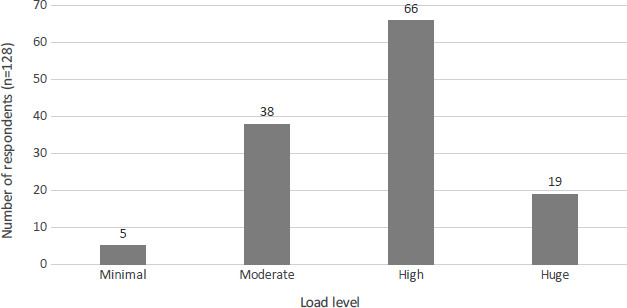
Analysis of the Caregiver Burden Scale scores revealed that most caregivers (51.6%) experienced a high level of overall burden, while 29.7% reported a moderate burden. The greatest difficulties were observed in the “Environment” and “Isolation” subscales.
An increased level of burden was significantly associated with longer caregiving duration, higher body mass index (BMI) of the care recipient (overweight/obesity), female sex of the caregiver (women reported higher burden) and a greater number of hours worked per month in paid employment. The highest burden scores were observed among caregivers with more than five years of caregiving experience and among those working more than 160 hours per month.
The analysis significant relationships between physical activity and caregivers’ emotional burden. In the “Emotional involvement” subscale, higher levels of vigorous physical activity (p = 0.014) and moderate physical activity (p = 0.023), as well as higher total physical activity (p = 0.026), were associated with lower emotional burden. An opposite pattern was found for sitting time, which showed a positive correlation with this burden dimension (p = 0.001). In the “Disappointment” subscale, a significant negative association was observed between burden and overall physical activity level according to the IPAQ classification (p = 0.038). These findings indicate that higher physical activity among caregivers was linked to lower emotional burden, although the strength of these associations was small.
The analysis demonstrated significant associations between physical activity and caregivers’ emotional burden. In the “Emotional Involvement” subscale, higher levels of vigorous physical activity (ρ = -0.217; p = 0.014), moderate physical activity (ρ = -0.201; p = 0.023), as well as greater total physical activity (ρ = -0.197; p = 0.026), were associated with lower levels of emotional burden. An opposite relationship was observed for sitting time, which showed a positive correlation with this dimension of burden (ρ = 0.282; p = 0.001). In the “Disappointment” subscale, a statistically significant negative association was observed between burden level and overall physical activity according to the IPAQ classification (ρ = -0,184; p = 0.038). These results indicate a co-occurrence of higher levels of physical activity with lower intensity of selected components of emotional burden. However, the observed correlations were weak in magnitude (ρ < 0.30), suggesting a limited strength of these associations.
Table 3
Spearman’s rho correlation between
The analysis further showed that younger caregivers more frequently reported willingness to engage in physical activity: the mean age in this group was 40.95 years compared with 48.64 years among those not willing to be active (p = 0.0048).
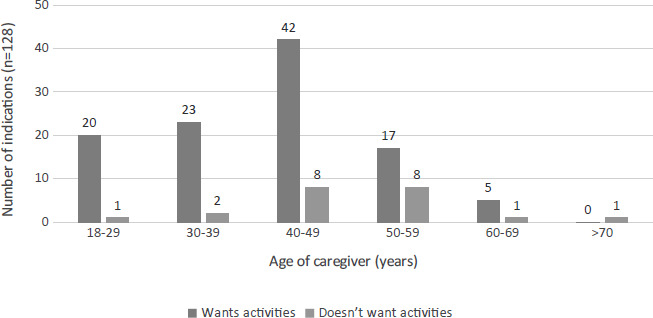
Most caregivers expressed a positive attitude towards participation in programmes promoting physical activity: 63% reported willingness to exercise together with the care recipient, and 59% with other caregivers. The most preferred form of activity was walking (78%), followed by cycling (28%), swimming (25%) and gymbased exercise (20%).
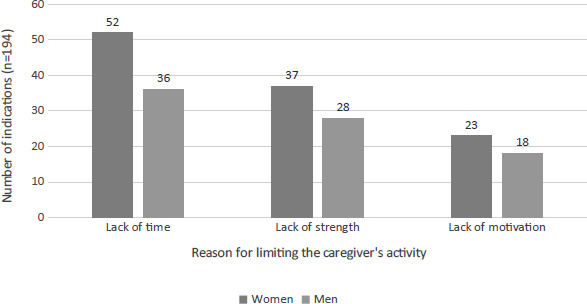
The most frequently reported barriers limiting engagement in physical activity were lack of time (45%), lack of energy (34%) and lack of motivation (21%). Women slightly more often than men indicated lack of time as an obstacle to being physically active (p = 0.055).
Discussion
The findings of the present study indicate that caregivers of stroke survivors in Poland currently experience a high level of burden associated with their caregiving role. Analysis of the CBS subscales showed that the greatest difficulties related to social isolation and environmental strain. These results are partly inconsistent with the study by GrabowskaFudali and Jaracz, in which the burden among Polish caregivers of stroke survivors was assessed as moderate and no relationship was found between caregiver burden and social support (13). This discrepancy may reflect changing social conditions and an increase in environmental barriers between 2007 and 2025. Diminishing institutional support, rising expectations placed on informal caregivers and progressive social isolation are likely to contribute to the intensification of experienced burden.
Within the studied group, several factors were identified that increased perceived burden. The most relevant variables related to the caregiving situation and the care recipient were a longer duration of caregiving (more than 1 year), a BMI of the care recipient above the normal range (>25) and a higher Timed Up & Go score (>20 s), indicating substantial limitations in the care recipient’s independence. Similarly, in the study by Jaracz et al., the most frequently identified determinants of burden were patients’ functional status and the time spent on care or the number of caregiving tasks (14). This may indicate a gradual accumulation of psychological and physical difficulties in longterm caregiving, particularly when care is provided for individuals who are overweight and have reduced mobility.
Significant associations were observed for selected emotional dimensions of burden. In the “Emotional involvement” subscale, negative correlations were found with both the intensity and total level of physical activity, and a positive correlation with sitting time, whereas in the “Disappointment” subscale, a negative association was observed between this type of burden and overall activity level according to the IPAQ classification. Although the strength of these relationships was low (ρ < 0.30), they suggest a potential - albeit limited -association between physical activity and the reduction of affective components of burden. These findings are consistent with reports in the literature indicating that physical exertion plays a significant role in reducing depressive and anxiety symptoms, which frequently co-occur among caregivers of individuals after stroke (15). Regular physical activity has been shown to positively influence regulation of the HPA axis, increase serotonin and dopamine levels, and enhance the expression of BDNF, thereby improving mood and psychological resilience (16). Thus, the obtained results suggest a possible link between physical activity and the emotional well-being of caregivers, potentially mitigating the negative consequences of long-term caregiving; however, these findings require confirmation in longitudinal studies.
Given that most caregivers of stroke survivors declared willingness to engage in physical activity - both individually and in the form of joint activities with the care recipient or groupbased activities with other caregivers - and that lack of time was the most frequently reported barrier, healthpromoting strategies should be designed in a way that integrates physical activity with everyday caregiving duties. It appears justified to develop recommendations based on interdisciplinary collaboration, involving physicians and physiotherapists, within which a joint physicalactivity plan for the care recipient and the caregiver would be created. Recent studies emphasise the promising role of caregivermediated interventions (17). Such programmes typically include sets of assisted, coordination, strengthening and relaxation exercises that are first explained and demonstrated by qualified therapists and subsequently performed independently by the caregiver–care recipient dyad. In addition, they incorporate moderate aerobic training (e.g. walking, Nordic walking) tailored to the dyad’s capabilities. Implementing dyadic exercise as an integral part of the therapeutic process not only increases the likelihood of improved rehabilitation outcomes but may also reduce caregiving burden and strengthen the emotional relationship between caregiver and care recipient. Joint physical activity may furthermore lessen feelings of isolation and facilitate reengagement in social activities for both parties (18).
Recent literature reviews underline that a lack of formal support and limited opportunities to “step out of the caregiver role” contribute to the intensification of depressive symptoms, anxiety and feelings of isolation; caregivers are therefore sometimes described as the “second patient” (19). Consequently, it is recommended that the standard of care for stroke survivors should include psychosocial components aimed at strengthening caregivers’ own resources. Evidence indicates that multicomponent support programmes - comprising regular group meetings, counselling, training in stresscoping strategies and opportunities to share experiences - can lead to significant reductions in subjective burden and stress levels among caregivers of stroke survivors in the chronic phase, at relatively low cost and with high effectiveness (20).
Study limitations
The study had a cross-sectional design, which precludes drawing conclusions about causal relationships between the level of physical activity and the perceived caregiving burden. The analyses conducted were primarily univariate and correlational in nature, without controlling for potential confounding variables; therefore, the observed associations should be interpreted as exploratory. An additional limitation is the online mode of recruitment, which may have favored participation by individuals who are more digitally active and potentially more motivated to engage in physical activity. Furthermore, the sample was not representative, and the predominance of women and urban residents may limit the generalizability of the findings to the broader population of caregivers of individuals after stroke in Poland.
Conclusions
Caregivers of stroke survivors constitute one of the largest and most heavily burdened caregiving groups, as confirmed by the high levels of overload observed in this study.
Although physical activity does not directly reduce the overall level of burden, it may alleviate its emotional components, such as emotional involvement and feelings of disappointment.
The majority of caregivers of stroke survivors express readiness to participate in programmes that promote physical activity, regardless of sex, current activity level or degree of caregiving burden. This indicates a substantial demand for flexible forms of support, including communitybased, hybrid and telerehabilitation programmes.
Programmes supporting caregivers’ physical activity should be planned, monitored and tailored to their individual capacities and living conditions in order to yield durable benefits.
Implications for nursing practice
The results of this study highlight the need to design and implement comprehensive support programmes targeted simultaneously at stroke survivors and their caregivers. Such programmes should include a component of joint physical activity adapted to the patient’s functional capacity and the caregiver’s burden, as well as educational modules on strategies for reducing caregiving overload and on the importance of caregivers’ own physical and mental health. A key role of the multidisciplinary team - including physicians, nurses, physiotherapists and psychologists - is not only to refer patients and caregivers to such interventions but also to systematically provide information about available forms of support and to actively promote caregivers’ participation.
In addition, there is a pressing need to increase awareness of the existence of caregiver support groups, as many individuals caring for stroke survivors function in practice without real, organised systemic backing. Dissemination of information about local and nationwide initiatives (including communitybased, hybrid and telerehabilitationbased programmes) and incorporation of such information into standard discharge procedures and educational activities in both inpatient and outpatient settings should become an integral part of clinical practice. These coordinated actions may help reduce caregivers’ isolation, decrease their emotional burden and improve longterm poststroke rehabilitation outcomes.