Introduction
Prevention is the prevention of diseases that occur more and more often in our lives. Prevention allows for early detection and treatment of the disease, which results in alleviating the course of the disease. We can prevent diseases both through the way we live and by undergoing screening tests, which will detect dangerous diseases at such a stage that there is still a good chance of curing and reducing the risk of complications. Cancer is a good example here, but not only that, because there are more diseases whose early detection will limit further development of the disease: e.g. diabetes, and hypertension. [9,4]
The aim of the work is to analyze our own survey research and formulate conclusions about the knowledge of the inhabitants of Płock and the surrounding area about preventive tests carried out by the National Health Fund in Poland.
Prevention programs
In Poland, the National Health Fund (NFZ) finances various types of preventive programs aimed at preventing diseases and promoting health. These programs cover a wide range of activities, from screening to health education. Some examples of preventive programs financed by the National Health Fund include: Screening programs:
Mammography program - targeted at women of a certain age for early detection of breast cancer. Pap test program - serves to detect cervical cancer through regular cytological tests (Pap test).
Colorectal cancer screening program - the program includes free colonoscopy. The aim of the program is to reduce the number of cases of illness and deaths due to colorectal cancer. The test should be performed between the ages of 50 and 65.
HPV screening program - for the prevention and early detection of cervical cancer.
Vaccination programs:
Vaccination program for children - includes a number of vaccinations against diseases such as diphtheria, tetanus, polio, hepatitis B, measles, mumps and rubella.
Flu vaccination program - aimed at people in risk groups such as the elderly, health care workers, and children of certain ages. [10]
Other programs:
Prophylaxis 40 PLUS - a program of free tests for everyone over 40 years of age. The aim of the program is to increase the number of people performing such tests, early detection of diseases and disorders, and prevention of their development.
Tobacco-related diseases prevention program (including COPD) - the aim of the program is to improve the effectiveness of the treatment of tobacco-related diseases, primarily respiratory diseases, circulatory system diseases, and cancer, and to improve awareness of the harmful effects of smoking and methods of preventing and treating tobacco addiction.
Educational and preventive program in the field of dental caries - the program aims to increase the level of knowledge about caries prevention and early detection of health problems thanks to preventive dental examinations. Preventive programs for chronic diseases - including health education, and lifestyle changes (e.g. promoting a healthy diet, and physical activity) aimed at preventing heart disease, diabetes, obesity, etc.
Early detection programs for chronic diseases - include check-ups and regular visits to the doctor for the early detection of diseases such as hypertension, diabetes, and heart disease.
The National Health Fund runs many such programs that are available to citizens as part of public health care. The allocation of funds for specific preventive programs usually depends on health priorities and decisions made by the National Health Fund and the Ministry of Health [5]
Material and methods
In our study, we used the diagnostic survey method using a research tool - a questionnaire. The survey was available in paper and electronic versions. The study used a self-designed questionnaire, which consists of an information sheet, 18 single-choice questions, and 4 multiple-choice questions. All survey questions were answered by 322 people who constitute the study group. The anonymous surveys included questions about age, gender, education, place of residence, marital status, and questions about preventive programs.
Characteristics of the study group
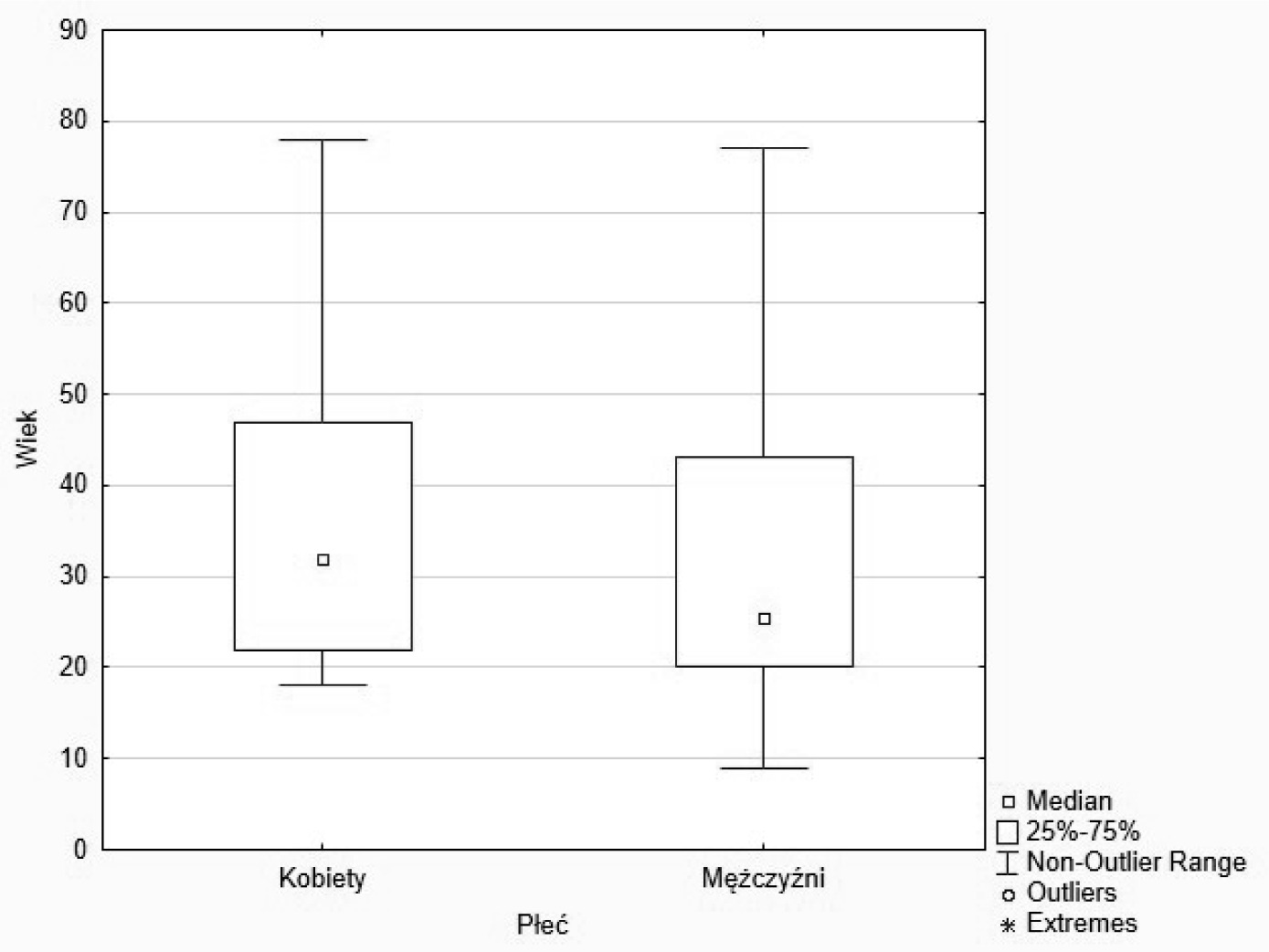
322 people took part in the anonymous survey. The respondents included 86% women (N-276) and 14% men (N-46). 50% (N-161) of respondents came from rural areas, urban <50 thousand people. Residents – 11% (N-37), city 50-200 thousand. Residents – 27% (N-88), a city 200-500 thousand. Residents – 6% (N-18), city > 500 thousand. Residents – 6% (N-18). The largest group of respondents were people declaring their marital status as married 43% (N-140), then maiden/bachelor 30% (N-96), having a partner 17% (N-55), widow/widower 5% (N-15), divorced 4% (N-14), separated 1% (N-2). In terms of education, 52% (N-167) of people with secondary education participated in our study. 41% (N-132) of respondents obtained higher education, while 5% (N-17) had basic vocational or vocational education, and 2% (N-6) had primary education. The minimum age of the respondents was 18 years and the maximum age was 78 years. The minimum age for women was 18 years and the maximum age was 78 years. The minimum age for men was 19 years and the maximum age was 77 years. [Table 1, Figure 1]
Results
The vast majority of respondents - 85% (N-274) knew about the existence of preventive programs reimbursed by the National Health Fund, 15% (N-48%) did not know. Most of them did not use preventive programs reimbursed by the National Health Fund - 55% (N-176), 28% (N-89) did, and 18% (N-57) did not know whether the test was covered by the preventive program.
More than half of the respondents - 61% (N-195) answered correctly that a free mammogram as part of the breast cancer prevention program should be given to a woman aged 50 to 69 who has not had a mammogram as part of preventive health care in the last 24 months. [Table 2]
Table 2
Free mammography examination as part of the breast cancer prevention program -respondents’ answers - own study
The preventive program for tick-borne diseases is addressed to people aged 15 and over, people exposed to contact with ticks, and people bitten by a tick. This question was multiple choice. The majority of respondents - 44% (N-157) indicated in the survey that they did not know who the preventive program for tick-borne diseases was addressed to. This question was multiple choice. [Table 3]
Table 3
Dedicating a preventive program to tick-borne diseases - respondents’ answers - own study
| Answer | Respondents | % |
|---|---|---|
| For people aged 15 and over | 40 | 11% |
| For people often exposed to contact with ticks | 78 | 22% |
| To people bitten by a tick | 78 | 22% |
| I don’t know | 157 | 44% |
| Altogether | 353 | 100% |
The aim of the dental caries prevention program for young people is to increase the level of student’s knowledge about tooth caries prevention by following the rules of proper oral hygiene, drawing attention to the fact that caries risk factors and oral diseases are related to lifestyle, early detection of health problems thanks to preventive dental examinations. The largest percentage of respondents - 43% (N-166) answered that the program aims to increase the level of student’s knowledge about preventing tooth decay by following the rules of proper oral hygiene. [Table 4]
Table 4
Objectives of the dental caries prevention program for young people - respondents’ answers - own study
The next question concerned the test performed as part of the colorectal cancer screening program. Most of the responders - 80% (N-257) indicated the correct test, i.e. colonoscopy. 11% of respondents (N-36) marked the answer “I don’t know”, while 8% (N-27) indicated the examination - gastroscopy and 1% (N-2) marked the examination - bronchoscopy. [Table 5]
Table 5
A study performed as part of the colorectal cancer screening program - respondents’ answers - own study
| Answer | Responders | % |
|---|---|---|
| Gastroscopy | 27 | 8% |
| Colonoscopy | 257 | 80% |
| Bronchoscopy | 2 | 1% |
| I don’t know | 36 | 11% |
| Altogether | 322 | 100% |
Less than half of the respondents - 49% (N-158) correctly answered who the colorectal cancer screening program is aimed at, unfortunately as many as 30% (N-97) do not know who the recipient of this test is. The colorectal cancer screening program is aimed at people aged 50 to 65 or aged 40 to 49 if the patient’s closest relatives have been diagnosed with colorectal cancer. [Table 6]
Table 6
Colorectal cancer screening program - respondents’ answers - own study
Less than half of the respondents - 46% (N-196) did not participate in tests offered by preventive programs. The cervical cancer prevention program was used by 15% (N-62), breast cancer prevention program - 12% (N-49), and prevention under the 40 PLUS program - 8% (N-36). [Table 7]
Table 7
Respondents took advantage of preventive programs - respondents’ answers - own study
Among the responders, 51% (N165) of them answered that the study helped them assess their health. One-fifth of the respondents - 20% (N-118) do not get tested due to lack of time, 18% (N-102) of respondents do not have symptoms, while 18% (N-103) do not get tested due to fear of an unfavorable diagnosis, 19% (N-113) because no one suggested it to them. The majority of respondents - 79% (N-255) were not informed by a doctor/nurse about preventive programs. Only 21% (N-67) of respondents were informed. The survey shows that the public would be willing to use the programs - 82% (N-265) if a doctor/nurse suggested that they use a given program. 14% (N-46) of people answered “I don’t know”. However, 3% (N-11) of respondents answered “no”.
Slightly more than half of the respondents - 54% (N-173) replied that they were aware of the frequency of diseases mentioned in preventive programs. Almost everyone - 92% (N-296) is in favor of more preventive programs.
Due to the level of significance (p>0.05), there were no statistically significant differences between the gender groups of the respondents regarding specific issues of knowledge and awareness of treatment. [Table 8]
Table 8
Differences in the results of individual knowledge issues between gender groups of respondents - own study
Due to the level of significance (p>0.05), there were no statistically significant differences between the groups of respondents’ place of residence regarding specific issues of knowledge and awareness of treatment. [Table 9]
Table 9
Differences in the results of individual knowledge issues between groups of place of residence - own study
Due to the level of significance (p>0.05), there were no statistically significant differences between the marital status groups of the respondents regarding specific issues of knowledge and awareness of treatment. [Table 10]
Table 10
Differences in the results of individual knowledge issues between marital status groups - own study
Due to the level of significance (p<0.05), statistically significant differences were noted between the education groups of the respondents regarding the item: Do you know that there are preventive programs reimbursed by the National Health Fund? A difference was noted between people with primary education and higher education. [Table 11]
Table 11
Differences in the results of individual knowledge issues between education groups -own study
Discussion
In Poland, the National Health Fund (NFZ) offers several preventive tests that are free of charge for all insured persons. The aim of these tests is to detect diseases early, which leads to more effective treatment and a significant improvement in the quality of life of patients. [1,3]
Gender, place of residence, and marital status of respondents did not affect the level of knowledge regarding preventive programs financed by the National Health Fund. The respondents’ answers were influenced by their level of education and age. The higher it was, the more often respondents indicated the correct answer. Younger people may be less aware of the need to implement preventive programs, especially if they have not yet experienced serious health problems or do not need to use health care services frequently. Middle-aged people are more often aware of chronic diseases such as diabetes, hypertension, and heart problems, which may prompt them to seek information about preventive programs. As people age and experience health problems, they may be more inclined to seek information about preventive programs to maintain good health in the future. Older people are more likely to be aware of and use screening programs such as mammograms and pap smears because they are usually recommended for older people. [3]
Education may also significantly influence the level of awareness of programs financed by the National Health Fund and their use. People with higher education often have better access to various sources of information, which allows them to find and understand preventive programs offered by the National Health Fund. A lack of education can make certain information about health programs more difficult to understand, which may influence decisions about using these programs. [3]
Najdyhor and others assessed women’s and men’s knowledge about breast cancer prevention. In their study, respondents indicated that mammography should be performed from the age of 40 - 36% of women, 39% of men; from the age of 30 - 30% of women, 23% of men; from the age of 20 - 13% of women and 19% of men, after the age of 50 - 15% of women and 13% of men, and in other periods - 1% of women. Had no opinion on this issue - 5% of women and 6% of men.
Comparing our study, in which residents of the Płock region and surrounding areas commented on the breast cancer prevention program, we can conclude that more than half of the people answered the question correctly. 61% of respondents (N-195) believed that a woman aged 50 to 69 is entitled to a mammogram who has not had a mammogram as part of preventive health care in the last 24 months. 21% (N-69) of respondents marked the answer that it is due to a woman aged 18 to 70 who has not had a mammogram in the last 12 months as part of preventive health care. 16% (N-52) of people did not know the answer to this question.
In summary, higher education and age influence the awareness of programs financed by the National Health Fund. However, there are also other factors, such as availability of information, active pursuit of health education, and personal involvement, that are crucial for all age groups to increase awareness and use of available prevention programs. Therefore, educational campaigns and the provision of easily accessible information can be key to increasing awareness among various social groups. [5,4]
Conclusions
Gender, place of residence, and marital status of respondents did not affect the level of knowledge regarding preventive programs financed by the National Health Fund. The respondents’ answers were influenced by their level of education and age. The higher it was, the more often respondents indicated the correct answer.