Introduction
According to the World Health Organization (WHO), health is a state of physical, mental, and social well-being, not merely the absence of disease or infirmity [1]. Illness can cause human suffering and a sense of insecurity. It also very often leads to anxiety and depression. A sick person fears an uncertain future, disability, and death. The development of medicine and medical sciences made civilization standards and human life more health-oriented, which contributed significantly to the prolongation of life in society [4]. When implementing a therapy, it is important to adopt a holistic approach and treat both the body and mind [5]. Patients have different attitudes towards illness, which affects their functioning as well as their physical and mental state. Illness often forces people to change their lifestyle and can be perceived as an obstacle to overcome, a loss, or a relief [6].
Acceptance of the disease reduces the intensity of negative reactions and emotions associated with it, while lack of acceptance causes great discomfort and impairs the ability to adapt [7].
Physical activity modifies the progressive aging process and decreases the rate of deterioration in mental and physical fitness. An active lifestyle significantly slows down organ changes resulting from the aging process of the human body. The current recommendations of the World Health Organization (WHO) regarding physical activity for older people are at least 150-300 minutes of moderate-intensity aerobic physical activity weekly. Other recommendations include 75-150 minutes of high-intensity aerobic physical activity per week or moderate- or high-intensity muscle-strengthening exercises at least two times per week [8].
Stress is a psychological state of strain on the mental regulation system. It occurs in difficult or life-threatening situations, or when it is impossible to complete tasks [9]. Stress has a negative impact on the human body. Stressful situations lower self-esteem and take away the will to live [10].
Sick sinus syndrome (SSS) refers to a group of heart rhythm disorders caused by sinus node failure. Fast sinus rhythms, characteristic for this syndrome, exacerbate sinus node depression and may eventually cause sinus bradycardia, sinus arrest, and sinoatrial blocks [11].
Material and methods
The study was conducted in a group of 211 individuals aged over 65 years with sinus node disease who were qualified for cardiac pacemaker implantation. The participants, including 133 women and 78 men, were selected from among patients treated at the Department of Interventional Cardiology and Heart Rhythm Disorders of the University Teaching Hospital No. 2 and the Department of Electrocardiology of the Central Teaching Hospital, Medical University of Lodz. The study was conducted during the COVID-19 pandemic, from December 2020 to December 2022.
The criteria for participation in the study were the following: being qualified for cardiac pacemaker implantation, age over 65 years, verbal communication skills, and consent to participate in the study.
The research tools used were the Acceptance of Illness Scale (AIS), the VES-13 (Vulnerable Elders 13 – Survey) scale for assessing patient independence, and an original questionnaire. The AIS scale can be used in adults to assess the degree of acceptance of illness in any disease entity. The scale consists of eight statements concerning the negative consequences of poor health. Responses to each statement are rated on a five-point Likert scale, where one indicates a lack of acceptance of the illness and five indicates good adaptation to it. The maximum score a patient can achieve is 40 points. Based on the results, the patient is classified into one of the three categories: lack of acceptance of the disease - below 19 points, intermediate acceptance of the disease - 19-29 points, acceptance of the disease - 30 points and above [12].
The VES-13 scale consists of 13 questions and allows for determining the patient’s independence and predicting a significant deterioration in their health, functional capacity, or death within the next two years. The first question concerns the patient’s age (60-74 years, 75-84 years, 85+). Each age group is assigned a certain number of points. The patient can score between 0 and 3 points. The next question concerns the self-assessment of health, i.e., whether it is excellent or good (yes = 0 points) or average or poor (yes = 1 point). Questions 3-8 cover the assessment of difficulties in performing four functional and two physical activities. The assessment method for the questions is as follows: 0 points - the patient is independent in every activity, 1 point – the patient has difficulty in performing one activity, 2 points – the patient has difficulty in performing two or more activities. Questions 9-13 cover the assessment of three physical activities and two functional activities. Question scoring: 0 points – patient is able to perform all activities, 4 points – difficulty performing at least one activity. The obtained results are interpreted as follows: 0–2 points – patient is independent, no risk of deterioration in health, 3–10 points – patient is dependent, high risk of deterioration in health or death within two years. In such cases, a comprehensive geriatric assessment is recommended [13]. The original questionnaire consisted of seven questions referring to sociodemographic data, i.e., age, gender, height, weight, marital status, education, place of residence.
The respondents qualified for cardiac pacemaker implantation were classified into three age groups: 65–74 years, 75–84 years, and over 85 years.
Statistical analysis
The data obtained from the surveys were used to create a database which was then analyzed using Statistica (StatSoft, TIBCO, Poland) version 13.3. Nominal variables were presented using frequencies and percentages. Continuous variables in independent pairs were compared using the non-parametric Mann-Whitney U test, while continuous variables in multiple independent groups were compared using the non-parametric Kruskal-Wallis test. Statistically significant results were presented using box-and-whisker plots. In all cases, a significance level of p < 0.05 was adopted.
Results
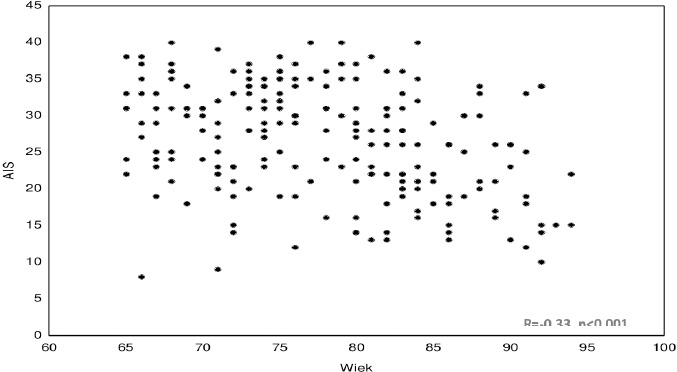
The mean age of the respondents was 78 ± 7.56 years. Most respondents in the study group were women. The cohort was dominated by widowed or married individuals with secondary or vocational education, living in cities. Due to the small number of divorced patients (2.4%) and those declaring themselves as single (3.3%), it was decided that for further statistical analysis, these groups would be combined with widowed persons into one group (“single”). The mean height of the study participants was almost 165 cm, the mean weight was 75 kg, and the mean Body Mass Index (BMI) was 27 kg/m2. When assessing their own acceptance of the disease (according to the AIS scale), the highest number of points was awarded by the respondents to the acceptance of the disease by their family for whom they were not a burden. In the study cohort, most patients had no difficulties adapting to the limitations caused by the disease. The participants in the study felt that their illness did not prevent them from being fully functioning individuals. When assessing the acceptance of illness in the study group, it was shown that the condition did not limit the respondents in performing their favorite activities and did not make them feel useless or dependent on others. Almost half of the respondents declared full acceptance of the disease, one in three accepted it indirectly, while one in five respondents declared a lack of acceptance (Table 1). Analysis of the results showed that older patients achieved a worse score on the AIS scale in terms of acceptance of their own disease than younger patients (p<0.001) (Fig. 1). Assessment of illness acceptance according to the AIS scale showed that both patients aged 65-74 years and those aged 75-84 years accepted their illness to a greater extent than those aged over 85 years (p<0.001). Data analysis showed that both women and men declared a similar degree of acceptance of their own disease. A similar level of acceptance of the disease was declared in the study by both urban and rural residents. The lowest level of acceptance of the disease was found among patients with primary education (20 points), while respondents with secondary education accepted the disease most easily (31 points) (p<0.001). The next stage of the study was an analysis of the subjective assessment of the respondents’ independence and the prediction of the deterioration of their functional capacity (answers to individual questions based on the Vulnerable Elders 13 - Survey “VES - 13” scale). Most of the respondents rated their health as good, while at the same time indicating difficulties in performing individual activities analyzed independently. Almost the whole cohort was concerned about a deterioration in their health over the next two years.
Table 1
Level of acceptance of the disease according to the AIS scale.
| AIS | N (%) |
|---|---|
| Full acceptance of the disease | 97 (45.97%) |
| Partial acceptance of the disease | 75 (35.55%) |
| No acceptance of the disease | 39 (18.48%) |
When assessing the risk of health deterioration according to the VES-13 scale depending on the age of the respondents, it was shown that it was higher in older patients than in younger individuals (p<0.001). In the studied cohort, the risk of health deterioration in the near future was highest among subjects aged over 85 years (ten points). In the group of patients aged 75-84 years, the risk was lower, reaching seven points, while in those aged under 74 years, the VES-13 score was six points. The risk of health deterioration in the next two years was similar for both sexes and for people living in cities or rural areas (p=0.617, p=0.586). The study shows that the lowest risk of health deterioration was among individuals with secondary and higher education ( six points on the VES-13 scale). Patients with vocational education declared a slightly higher risk (seven points). In contrast, the greatest risk of health deterioration was found in respondents with primary education (eight points). The study showed that the risk of health deterioration according to the VES-13 scale was higher in single patients compared to married individuals (p<0.001).
Discussion
Illness affects the physical and mental state of every human being. Acceptance of disease by patients can be a motivating factor in the attempt to fight the diagnosed condition [6]. Earlier studies have reported a correlation between the degree of acceptance of the disease and the age of subjects [14]. Our own research has shown that patients in the youngest age group accepted their own disease most (30 points), while those aged over 85 years had the greatest difficulty accepting their disease. In their study including 64 men and 36 women with chronic heart failure, Uchmanowicz et al. found no significant differences in disease acceptance in terms of gender. The mean AIS score for both women and men was 24 points [15]. In our own study, the ratio of women to men was reversed, with 133 women and 78 men. The values obtained did not differ significantly between the women (28.0 points) and men (28.5 points) surveyed. Both women and men declared indirect acceptance of the disease according to the AIS scale. In a study conducted by Rolka et al., 76% of respondents were urban dwellers (45% in cities with more than 10,000 inhabitants, 31% in cities with less than 10,000 inhabitants), while 24% of respondents were patients from rural areas. The same study showed that respondents from smaller towns and rural areas declared moderate acceptance of the disease [14]. The respondents included in the results of our own research came from cities (with the number of inhabitants unspecified) and rural areas (only about 14% of all respondents). In both groups, acceptance of the disease was moderate, reaching 28 points. The available literature shows that education has no impact on the degree of acceptance of the disease in patients suffering from migraine [16]. The highest level of acceptance of the disease among respondents qualified for cardiac pacemaker implantation was declared by patients with secondary education (31 points) and higher education (29 points). On the other hand, patients with primary education had the greatest difficulty in accepting the disease. Research conducted by Moczydłowska et al. demonstrates that married people accepted the disease at a full or moderate level, while widowers declared the greatest lack of acceptance of the disease [17]. Our own study found that married people fully accepted the disease (31 points), while single people scored 26 points, which indicates average acceptance of the disease. In earlier studies conducted among patients with chronic obstructive pulmonary disease, the degree of acceptance of the disease averaged 19 points, indicating indirect acceptance of the disease by patients [18]. Studies conducted by Kowalczyk et al. among patients with heart failure indicate average acceptance of the disease in this group of respondents [19]. In the current study, nearly 46% of the subjects declared full acceptance of their disease, over one-third declared moderate acceptance, and approximately 20% of the respondents did not accept their condition. In their study conducted among patients with chronic obstructive pulmonary disease, Kupcewicz et al. showed a low level of acceptance of adaptation to the limitations caused by the disease and to the activities performed (1.59 ± 0.89) [18]. The current study showed that nearly 40% of the respondents (83 individuals) had no problems accepting the limitations resulting from the disease. However, 30% of the respondents (65 individuals) were unable to determine their level of acceptance of these limitations, while 5.69% (12 individuals) declared difficulties in accepting the limitations resulting from the disease. When analyzing limitations in performing favorite activities, it was found that nearly one-third were patients whose illness did not prevent them from performing these activities, while 11.85% (25 individuals) believed that their health condition was the cause of the limitations. In a study involving patients with diabetes, Kurpas et al. showed that nearly two-thirds of respondents did not consider themselves a burden on their families because of their illness. Most of them even felt useful (58%) [20]. Our own analysis showed that the majority of the respondents had families who accepted their illness. Only 2.84% of the subjects agreed with the statement that their illness made them a burden to their loved ones. Approximately 50% of the patients surveyed disagreed with the statement that they might feel useless because of their illness. Only 5% of the respondents (11 individuals) shared this belief. An important factor that, according to the researchers, influences a patient’s non-acceptance of their illness is the belief that those around them fear its progression and consequences [21]. However, the group of respondents surveyed did not share the concerns of their predecessors, as the majority disagreed with this statement. The available literature shows that patients with chronic obstructive pulmonary disease mostly agreed with the statement that they would not be as self-sufficient as they would like to be (173) [18]. In the cohort of patients with cardiac conditions who were qualified for pacemaker implantation, almost 40% of respondents believed that they would be fully independent in their daily functioning. Additionally, half of the patients felt that, despite their illness, they were fully functioning individuals. Age has a significant impact on the functional capacity of seniors. As people grow older, they may experience health problems and physical limitations that affect their ability to perform everyday activities. A study conducted by Gryglewska et al. showed that the oldest patients had a higher mean score on the VES scale (13) compared to younger patients [22]. Our own research has shown that individuals aged under 74 years scored the lowest on the VES-13 scale. In contrast, the group of respondents over the age of 85 years who were qualified for pacemaker implantation scored the highest on the scale assessing the risk of health deterioration. Previous studies have found no significant correlation between health deterioration (VES-13 scale) and patient gender. The fear of health deterioration occurs in both sexes. Both women and men may experience a similar degree of health deterioration [22]. Our own analysis of the respondents qualified for cardiac pacemaker implantation also showed no differences in the assessment of the risk of health deterioration depending on gender. Women and men scored an average of seven points on the VES-13 scale. The available literature shows that both women (27.4%) and men (20.7%) aged over 65 years from rural areas reported poorer health than urban residents (women 22.5%; men 18.7%) [23]. The results of the current study show no differences in the assessment of the risk of deterioration in health, functional capacity, or death within the next two years among individuals living in cities and rural areas. When analyzing the relationship between educational attainment and the risk of cardiovascular disease in middle-aged and older adults, Magnani et al. found that lower educational attainment was associated with a higher risk of cardiovascular disease [24]. The current study showed that subjects with higher education (six points) and secondary education (six points) had a lower risk of significant deterioration in health, functional capacity, or death within the next two years than people with vocational education (seven points) and primary education (eight points). Studies conducted among older people have found that interpersonal bonds and relationships, as well as social support, determine better self-assessment of health, as well as mental and physical well-being [25]. Our own research confirms earlier reports of better results of health self-assessment among respondents who have good relationships and support. Married patients showed a lower risk of health deterioration than single people. Analyzing the risk of significant deterioration in health, functional capacity, and death within the next two years among patients admitted to a geriatric-internal medicine ward, Gryglewska et al. showed that nearly 90% of the study participants scored ≥ 3 points on the VES-13 scale [22].
Conclusions
Acceptance of the disease was best assessed by younger individuals who declared themselves to be married and had secondary or higher education.
Among patients qualified for cardiac pacemaker implantation, the risk of significant deterioration in health, functional capacity, or death within the next two years increased with age. It was also higher in those unmarried and having a lower level of education.
The patient’s gender and place of residence are not factors determining quality of life, acceptance of the disease, or risk of health deterioration.
Elderly people, often lonely after death of their spouse, are a group of patients requiring special attention from primary health care staff and social workers.